💡 Key Takeaway
Microsoft Dynamics GP has supported finance, accounting and business operations for decades. However, Microsoft has announced the end of support for the platform, giving businesses a clear timeline to review their existing ERP systems and plan their next steps.
For organisations that rely on Microsoft Dynamics GP for daily operations, the important question is not just when support ends, but what the change means for business continuity, security and future growth. Understanding the key dates can help businesses prepare for a transition without disrupting essential processes.
When Does Microsoft Dynamics GP Support End?
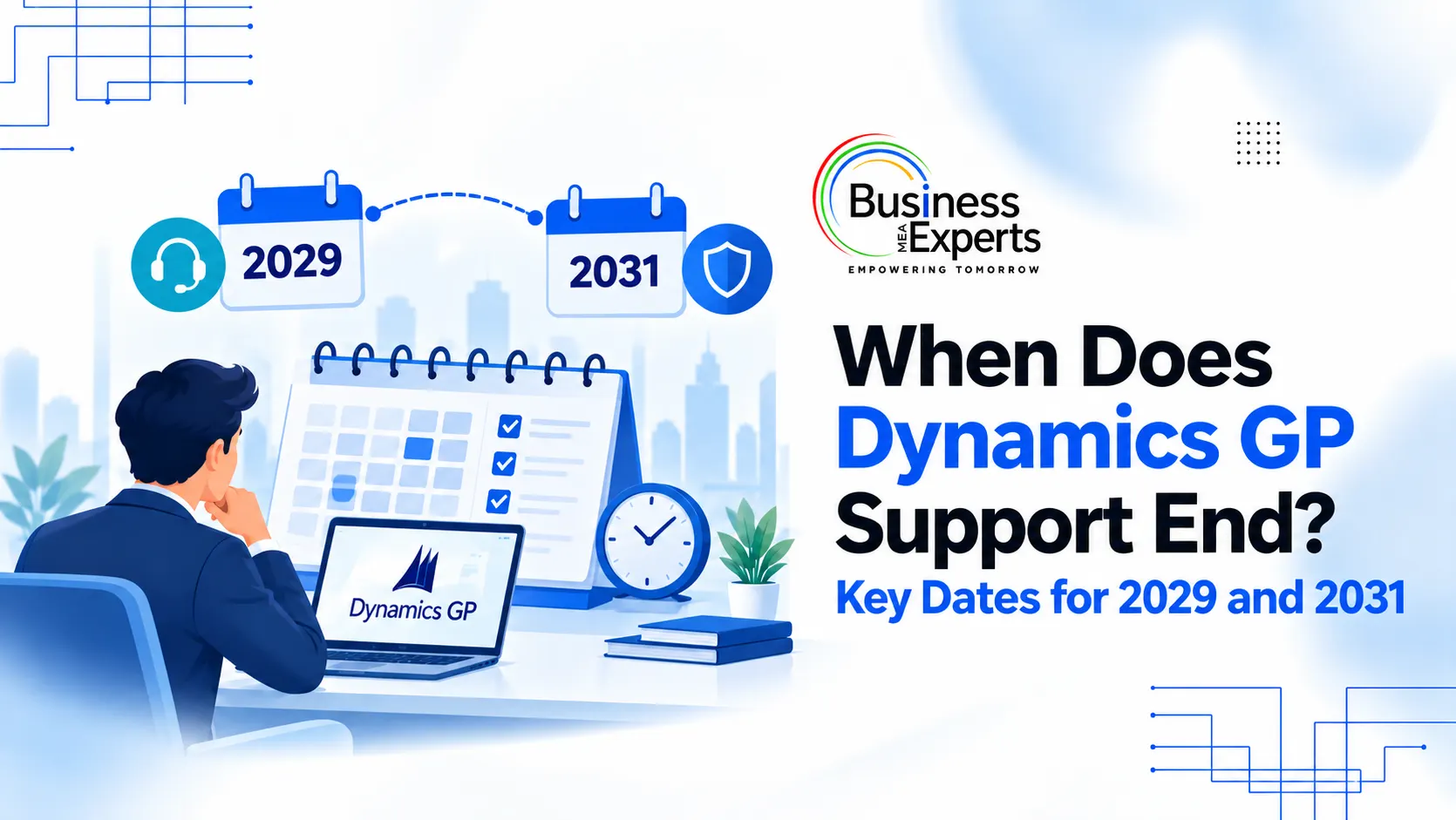
Microsoft has confirmed two major dates for Microsoft Dynamics GP Partners users: 31 December 2029 and 30 April 2031. These dates mark different stages in the product’s retirement, and businesses should understand the distinction before planning their ERP strategy.
31 December 2029: End of product support and updates
Microsoft will stop providing product enhancements, regulatory and tax updates, and technical support for Dynamics GP after this date. Businesses will need to consider how they will manage software issues and changing compliance requirements without these updates.
30 April 2031: End of security updates
Security updates and patches, if needed, will remain available until this date. After that, businesses should not expect further security patches from Microsoft for Dynamics GP, increasing the importance of a planned transition and appropriate risk management.
It is important to note that Dynamics GP will not cease to function on either date. Instead, businesses will progressively lose the support and updates that keep the system reliable, secure and aligned with evolving requirements.
What Does the End of Support Mean for Dynamics GP Users?
The impact will depend on how a business uses Dynamics GP, its current version, its integrations and the level of customisation within its environment. However, several areas deserve attention.
- Product updates restrictions: No more product updates from Microsoft will be received by the company, and this may make it difficult for businesses to adapt to evolving requirements via Microsoft updates.
- Tax and regulations considerations: With no further regulations and tax updates, businesses will require other options to deal with changing requirements; thus, there is a need for proper planning and consultation.
- Security threats: After the cessation of security updates, any discovered threats may not be patched, and this may be a bigger risk for businesses in the future.
- Compatibility and integration issues: Businesses that rely on applications or reporting tools or third-party extensions must consider whether the components are going to fit their technology ecosystem in the future.
- Increased maintenance costs: Older software may become difficult to maintain, especially where the business has to work on the issue itself or with specialists.
Why Businesses Should Start Planning Before 2029
An ERP transition involves more than transferring financial records from one system to another. Businesses must review their existing processes, identify customisations, assess third-party integrations and decide which data needs to move to the new platform.
Starting early gives your finance, IT and operations teams room to do this properly. You can set a realistic budget, test migrated data, train people, and schedule go-live away from your busiest periods like year-end. Microsoft itself recommends working with a partner to assess your current environment and agree a migration approach.
Is Microsoft Dynamics 365 Business Central the Right Successor?
If you’d like to stay in the Microsoft world, Dynamics 365 Business Central is the obvious option to look at. It’s a cloud-based ERP that brings finance, sales, purchasing, inventory and other core functions into one place, which can cut down the effort of juggling separate systems.
Business Central can help organisations improve access to business information, connect workflows and reduce the effort involved in maintaining separate systems. However, it is not a direct upgrade from Dynamics GP. Businesses must assess functional requirements, historical data, customisations and integrations before deciding whether it is the right fit.
Organisations with more complex enterprise requirements may need to evaluate other ERP solutions. The right choice depends on the business’s size, operational needs, industry and long-term plans.
How BEMEA Can Help with Your Dynamics GP Transition
A good starting point is being clear about what your business needs now and where you expect to be in a few years. BEMEA works with Microsoft Dynamics 365, Power BI and Azure, and can help you assess your requirements, spot processes worth simplifying, and plan a move to a modern Microsoft business platform. Its analytics and cloud experience can also improve reporting and connect your systems more smoothly.
If you’re searching for a Dynamics GP service provider in Dubai or a Microsoft partner in the UAE, it’s worth asking how a partner will handle both the migration and the systems around it. That includes sector-specific tools, such as property management software in Dubai, so your financial and operational workflows stay consistent.