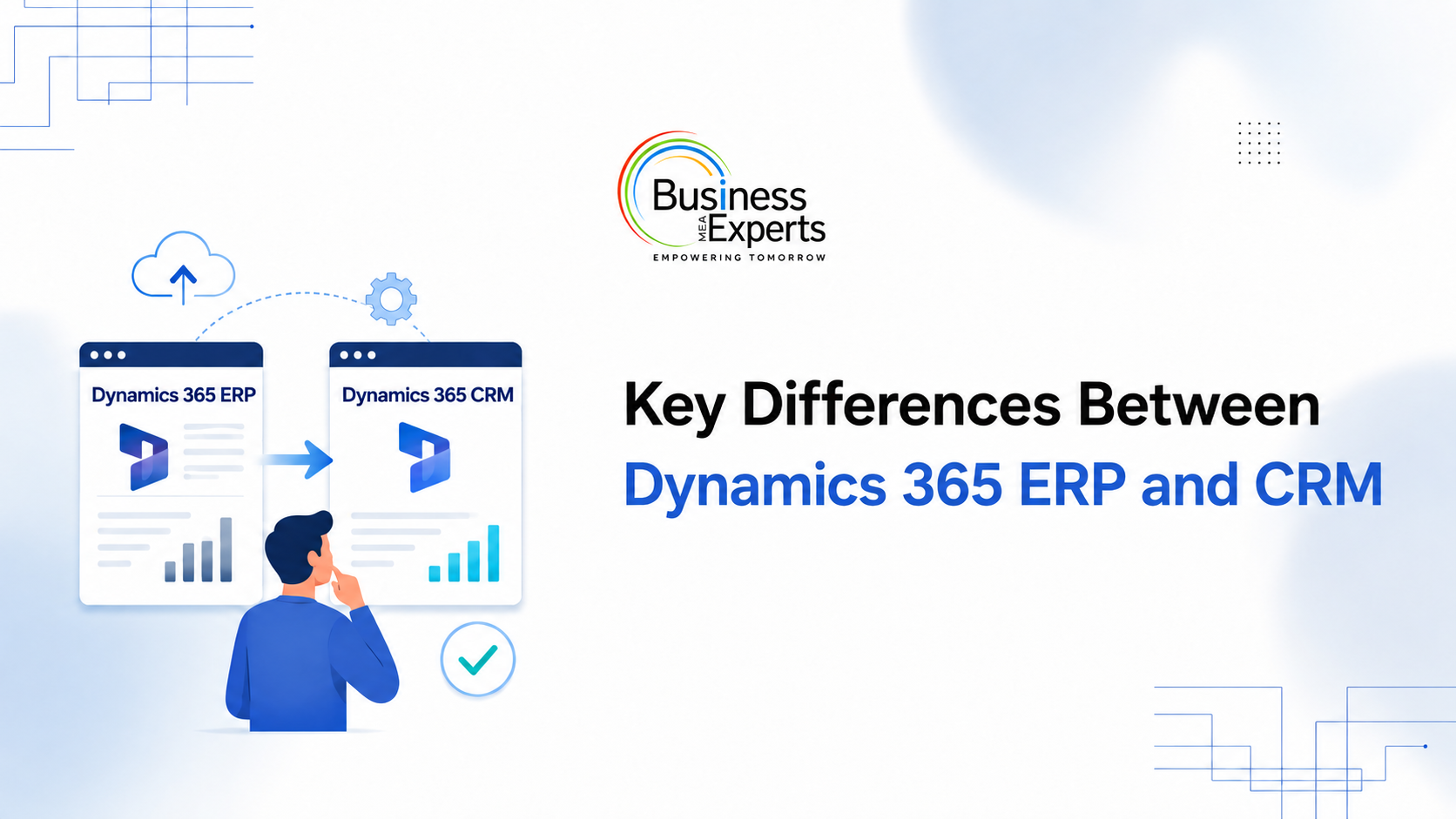
CRM and ERP address different sides of business management. CRM supports customer-facing processes such as sales, marketing, and service, while ERP manages finance, supply chain, inventory, and other core operations. Microsoft Dynamics 365 brings these capabilities together through connected business applications.
At BEMEA, we help businesses assess and implement the right Dynamics 365 applications for their operational needs. Understanding the difference between CRM and ERP helps organisations choose the right combination of solutions and create a more connected business environment.
What is Dynamics 365 CRM?
Dynamics 365 CRM focuses on the customer-facing side of a business. It helps sales, marketing, and service teams manage customer information, track interactions, follow opportunities, and improve engagement throughout the customer journey.
For a sales team, this could mean having a clear view of leads, opportunities, sales activities, and customer communication in one system. Customer service teams can use customer information and case history to provide more consistent support.
Key Dynamics 365 CRM applications include:
- Dynamics 365 Sales for lead, opportunity, and pipeline management
- Dynamics 365 Customer Service for case management and customer support
- Dynamics 365 Field Service for managing field operations and service activities
- Dynamics 365 Customer Insights for understanding customer behaviour and engagement
What is Dynamics 365 ERP?
Dynamics 365 ERP focuses on the internal processes that keep a business running. It brings functions such as finance, procurement, inventory, supply chain, and operations into a connected business environment.
For example, a distributor may need to track inventory across warehouses, manage purchase orders, monitor costs, and maintain accurate financial records. An ERP system connects these processes so teams can work with consistent business data.
Dynamics 365 ERP applications include:
- Dynamics 365 Business Central for small and mid-sized businesses managing finance, sales, purchasing, inventory, and operations
- Dynamics 365 Finance for financial management, accounting, budgeting, and financial planning
- Dynamics 365 Supply Chain Management for procurement, inventory, warehouse, manufacturing, and supply chain operations
For larger and more complex organisations, Dynamics 365 Finance and Operations can provide broader capabilities for managing finance and operational processes across the enterprise.
Dynamics 365 CRM vs ERP
The simplest way to understand the difference is to look at what each system does.
| Area | Dynamics 365 CRM | Dynamics 365 ERP |
|---|---|---|
| Primary focus | Customer and revenue | Business operations and resources |
| Main users | Sales, marketing, and service teams | Finance, operations, supply chain, and warehouse teams |
| Key processes | Leads, opportunities, sales, services | Finance, inventory, procurement, supply chain |
| Business objective | Improve customer relationships and revenue | Improve operational efficiency and control |
| Data managed | Customer, lead, opportunity, and service data | Financial, inventory, procurement, and operational data |
Key differences between Dynamics 365 CRM and ERP
Understanding where CRM and ERP differ helps businesses choose the right Dynamics 365 applications for their processes.
Business focus
CRM focuses on customer engagement, sales, and service, while ERP manages finance, inventory, procurement, and supply chain operations.
Primary users
CRM is mainly used by sales, marketing, and customer service teams. ERP supports finance, operations, warehouse, and supply chain teams.
Data and processes
CRM manages customer, lead, opportunity, and service data, while ERP handles financial, inventory, procurement, and operational data. Connecting both gives teams a more complete view of business activities.
Can Dynamics 365 CRM and ERP work together?
Yes. This is one of the major benefits of the Dynamics 365 ecosystem. It isn’t a matter of either CRM or ERP. It can deploy the necessary Dynamics 365 apps and link them together based on their needs.
Consider a typical B2B sales process. A sales representative uses CRM to create and manage an opportunity in Dynamics 365 Sales. Once the customer places an order, the information can flow into ERP processes, where finance manages invoicing and supply chain teams handle inventory and fulfilment.
Which Dynamics 365 solution is right for your business?
The right choice depends on the processes you need to manage. Dynamics 365 CRM applications might be beneficial for a company with a primary focus on enhancing lead management, sales pipelines, customer engagement, or service operations.
Dynamics 365 ERP applications can be required to a business seeking to enhance financial management, inventory, procurement, supply chain or operational processes.
Business Central Dubai implementations can offer a hands-on approach to connecting finance, sales, purchasing, inventory, and operations, which is ideal for growing businesses looking for an integrated business management platform.
For larger organizations with more complicated financial and operational needs, a solution like Dynamics 365 Finance and Operations in addition to other Dynamics 365 solutions, may be required.
The important point is not simply choosing CRM or ERP. It’s knowing the different aspects of the business and choosing a solution that will support them as the business grows.
Implement Dynamics 365 with BEMEA
Choosing the right Dynamics 365 applications is only the first step. The successful implementation also relies on the solution’s configuration, integration, and alignment with the existing business processes.
Being one of the authorized Microsoft Dynamics Partners UAE, BEMEA assists companies in assessing and deploying Dynamics 365 solutions in light of their business needs. With Dynamics 365, Power BI, Azure, and Power Platform, they have the experience necessary to help businesses create solutions that are connected to all areas of finance, operations, customer management, analytics, and automation.