💡 Key Takeaway
Managing leases through spreadsheets and manual accounting can become difficult as businesses grow. Tracking payments, lease periods, liabilities, and financial records across different locations often leads to errors, delays, and compliance challenges. With accounting standards like IFRS 16 and ASC 842, businesses now need a more accurate and transparent way to manage lease data and financial reporting.
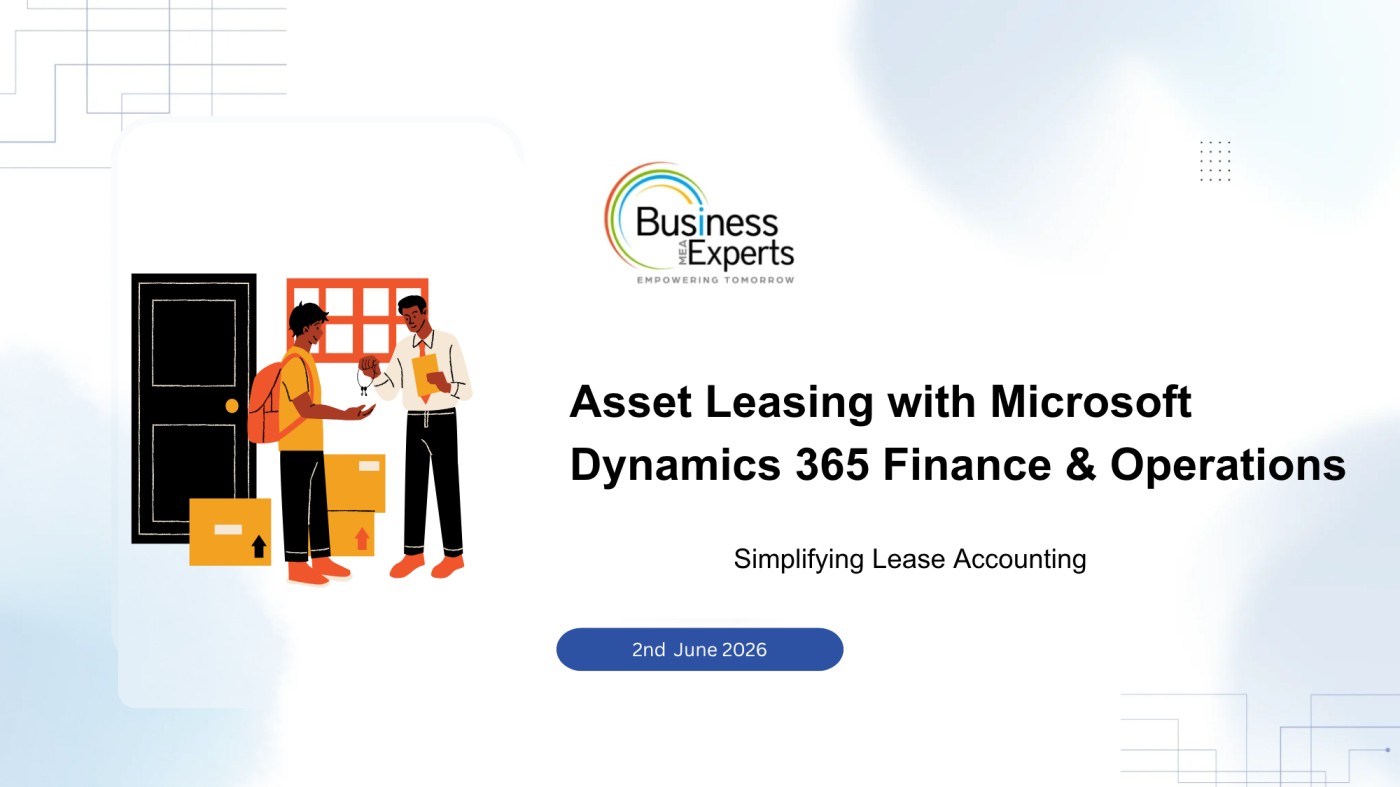
Microsoft Dynamics 365 Finance & Operations helps simplify this process by automating lease accounting, organizing lease information in one place, and improving financial visibility across the business. With support from BEMEA, organizations can implement and optimize these capabilities more effectively through expert guidance, integration, and automation.
Why Asset Leasing Matters More Than Ever
The introduction of IFRS 16 and ASC 842 fundamentally changed lease accounting practices. Earlier accounting standards allowed many operating leases to remain off the balance sheet, creating limited visibility into an organization’s true financial obligations. The updated standards changed this approach by requiring most leases to be recognized directly on the balance sheet.
As a result, organizations must now record:
- Right-of-use (ROU) assets
- Lease liabilities
- Interest expenses
- Depreciation schedules
- Lease modifications and reassessments
Organizations managing multiple leases across departments or regions often struggle with maintaining consistency and audit readiness. Asset Leasing in Dynamics 365 Finance & Operations addresses these challenges by centralizing lease information and automating critical accounting processes within a single ERP system.
Understanding Asset Leasing in Dynamics 365 Finance & Operations
Asset Leasing in Dynamics 365 Finance & Operations is an advanced module designed to manage, track, and automate financial transactions for leased assets throughout the entire lease lifecycle.
The solution supports organizations from the initial recognition of a lease through monthly journal entries, remeasurements, impairments, modifications, and eventual lease termination. Instead of relying on external spreadsheets or disconnected accounting systems, businesses can manage the entire process directly within Dynamics 365 Finance.
The module is fully aligned with:
- IFRS 16
- US GAAP (ASC 842)
This ensures organizations can maintain regulatory compliance while improving operational efficiency and financial transparency.
One of the biggest advantages of the solution is its seamless integration with other finance components within Dynamics 365, including:
- Fixed Assets
- Accounts Payable
- General Ledger
- Financial Reporting
- Vendor Management
This interconnected environment creates a unified financial ecosystem where lease data flows accurately across the organization.
Automating Complex Lease Calculations
Lease accounting involves numerous calculations that can quickly become difficult to manage manually. Present value calculations, liability amortization, depreciation schedules, and future payment projections all require precision and consistency.
Dynamics 365 Finance & Operations automates these calculations using configurable rules and accounting parameters.
The system can automatically calculate:
- Present value of lease liabilities
- Future lease payments
- Right-of-use asset values
- Interest allocations
- Amortization schedules
- Depreciation expenses
This automation significantly reduces manual intervention while improving accuracy across financial reporting processes.
Centralized Lease Lifecycle Management
Managing leases manually often results in fragmented data and limited visibility. Important information, such as payment schedules, renewal options, escalation clauses, and termination terms may be distributed across multiple files and departments.
Dynamics 365 Finance & Operations centralizes all lease-related information within a structured environment.
Organizations can track:
- Lease commencement dates
- Expiry and renewal periods
- Payment frequencies
- Currency details
- Vendor information
- Interest rates
- Asset classifications
- Modification histories
The platform also maintains a complete audit trail, allowing finance teams and auditors to review calculations, adjustments, and postings with confidence.
Compliance Without the Complexity
Regulatory compliance remains one of the most important drivers behind modern lease accounting systems. Both IFRS 16 and ASC 842 require organizations to maintain detailed records and accurate reporting structures.
Dynamics 365 Finance simplifies compliance by embedding accounting logic directly into lease processing workflows.
The system supports:
- Automatic lease classification
- Finance and operating lease recognition
- Short-term lease assessments
- Low-value lease determinations
- Lease liability measurement
- Right-of-use asset tracking
- Compliance-based journal generation
Instead of manually interpreting accounting rules for every lease, organizations can apply standardized configurations that ensure consistency across the enterprise.
Managing Lease Modifications and Revaluations
Lease agreements rarely remain static throughout their lifecycle. Interest rates may change, payment amounts can be adjusted, and lease durations are often extended or modified. Handling these changes manually introduces substantial accounting complexity.
Dynamics 365 Finance & Operations includes built-in workflows for managing:
- Lease modifications
- Reassessments
- Index-based revaluations
- Interest rate adjustments
- Early terminations
- Impairments
When changes occur, the system automatically recalculates liabilities and right-of-use assets while generating the appropriate accounting entries.
The Importance of Lease Books and Payment Schedules
Lease books play a critical role in asset leasing within Dynamics 365 Finance. They define the accounting framework applied to each lease and support different reporting standards across regions or business units.
Lease books can include:
- Lease type classifications
- Useful asset life
- Incremental borrowing rates
- Accounting policies
- Depreciation structures
For multinational organizations, multiple lease books help support parallel accounting standards without duplicate data entry.
Moreover, the system allows businesses to configure payment intervals, frequencies, and amounts to ensure accurate present value calculations and cash flow forecasting.
These schedules support:
- Treasury planning
- Budget management
- Financial forecasting
- Liability tracking
- Covenant monitoring
Stronger Financial Integration Across the ERP Environment
One of the biggest advantages of Dynamics 365 Finance & Operations is its deep integration across financial processes. Asset leasing is not treated as an isolated function. Instead, it works seamlessly with:
General Ledger: Lease transactions automatically generate journal entries that flow directly into financial statements and reporting structures.
Accounts Payable: Lease invoices and payment obligations can be connected to vendor payment workflows, improving operational efficiency.
Fixed Assets: Right-of-use assets integrate with asset accounting processes for accurate depreciation and asset tracking.
Power BI Analytics: Organizations can leverage Microsoft Power BI dashboards to monitor lease liabilities, maturity schedules, payment exposures, and financial performance trends in real time.
This integrated ecosystem improves financial visibility while reducing reconciliation efforts across departments.
How BEMEA Delivers Additional Value
While Microsoft Dynamics 365 Finance & Operations offers strong asset leasing capabilities, the real value comes from proper implementation and optimization. Business Experts MEA LLC helps organizations streamline lease accounting through expert Dynamics 365 implementation, ERP integration, Power BI analytics, and Azure-based automation.
From lease data migration and policy-based configuration to automated workflows and reporting dashboards, BEMEA enables businesses to simplify compliance, improve financial visibility, and manage lease operations more efficiently.